

After nearly two decades of one-party rule under theMovement Toward Socialism party, or MAS, three years of an accelerating currency crisis and too many months of mind-numbing fuel lines, Bolivia is lurching to the right.Now, the question is how much change do Bolivians want and how fast.
After nearly two decades of one-party rule, three years of an accelerating currency crisis and too many months of mind-numbing fuel lines,Boliviais lurching to the right.
For the first time since Bolivias Movement Toward Socialism party, or MAS, rocketed to power in 2005 under the maverick former union leaderEvo Morales, Sundays presidential runoff pits two conservative, business-friendly candidates against each other. MAS received so few votes in the August 17 elections that it almost lost its legal status as Bolivians expressed a prevailing desire for change.
Now, the question is how much change do Bolivians want and how fast.
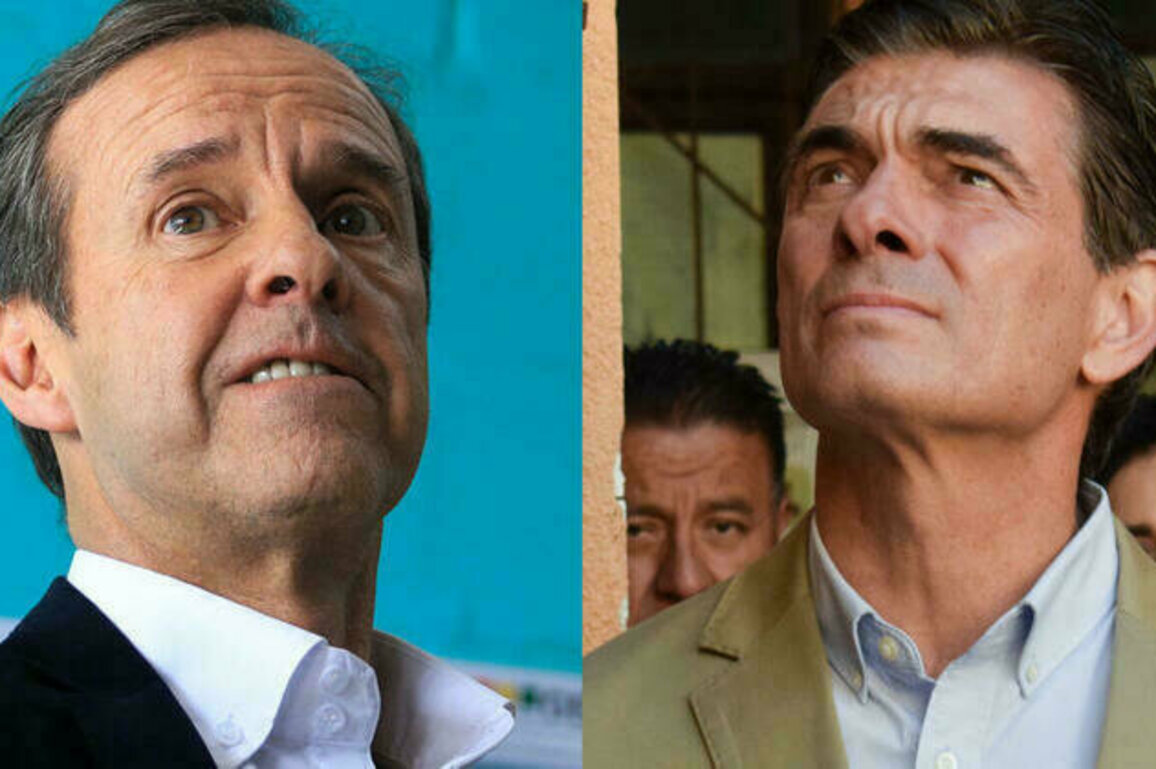
The next presidents immediate task must be to draw dollars into Bolivia and import enough fuel to ease the shortage. Jorge Tuto Quiroga, a right-wing former president who has run and lost three times before, envisions abailoutfrom the International Monetary Fund and a shock fiscal adjustment.
His rival Rodrigo Paz, a centrist senator, says hell scrounge up the cash by legalizing the black market, phasing out wasteful subsidies and luring Bolivians' hoarded dollars back into the banking system.
In the midst of the country's worst economic crisis in four decades, several ambivalent voters interviewed Thursday in El Alto, the sprawling city overlooking the capital of La Paz, doubted that either candidate could succeed in digging Bolivia out of its hole.
It's not going to be solved quickly, its going to take time, said Luisa Vega, a 63-year-old vendor of teddy bears at a frigid open-air market, knitting out of boredom because she had no customers. Almost no one had confidence in the previous politicians. Who is going to have confidence now?
Before dawn on the shores of Lake Titicaca, rafts piled high with bread, fuel, cooking oil and eggs slip across the border toPeru, where state-subsidized goods fetch triple what they do at home.
Smugglers in the border town of Desaguadero, two hours from La Paz, make little attempt to hide. Border guards look away.
With the official exchange rate between the boliviano and the dollar all but collapsed, it has become dirt cheap for Peruvians to shop in Bolivia and lucrative for Bolivians to sell in Peru. One Peruvian sol is worth nearly four bolivianos on the black market.
Crises are opportunities, said Ronald Vallejos, who travels twice a week to hawk flour and sugar in Peru. Dollars are sold at a steep premium so Vallejos arrives with stacks of bolivianos to trade for soles, later stashing the bills under his mattress and floorboards.
Because of strict price controls and dollar scarcity, Bolivia can't scrape together enough cash for imports. Food shortages have become a part of life. Queues snake outside subsidized bakeries. Empty shelves send shoppers on scavenger hunts for oil and rice.
Authorities blame smugglers for the scarcity and sky-high prices of staples even as the black market is more a consequence of the shortages than the cause.
Gratuitous spending, speculation, and smuggling are worsening the situation, increasing prices by up to 300% in some cases, said Jorge Silva, the deputy minister of consumer protection. Its a tough job in this bankrupt country; Silva said he was recently chased out of a street market when he tried to monitor prices.
Paz, 58, is struggling to strike the balance between appeasing Bolivians' desperation for change and courting working-class voters, many of whom are disillusioned MAS supporters who see Quiroga'sausterityas a recipe forrecession.
Rather than focusing on foreign investors as the key to development, Paz hopes to uncover hidden cash by cracking down on corruption and formalizing the black market. He proposes legalizing smuggled vehicles, offering tax amnesties to Bolivians who declare their stashed dollars and allowing the cross-border smugglers to register as vendors.
There will be no more smuggling, everything will be legal, he declared at his closing campaign rally Wednesday.
Paz's running mate, Edman Lara, has emerged as the real star of the campaign, helping the senator pull off a shock victory in the first round of elections. He captured first place after weeks of polling far behind Quiroga.
Ahead of Sundays vote, Quiroga is again leading opinion polls.
The underdog status has helped endear the privileged son of former President Jaime Paz Zamora (1989-1993) to the public.
Everyone is against him, the mainstream media, the pollsters, they want him to lose, said Salom Ramrez, 37, waiting at a bus stop in downtown La Paz. That means he gets my vote.
Captain Lara, as the vice presidential candidate is known, became something of a folk hero a few years ago after being fired from the police for denouncing corruption in viral TikTok videos.
The ex-officer has no political experience and an awkward habit of making populist promises like universal income for women in rousing speeches that contradict Paz's goal of restoring fiscal order.
Although Paz has walked back some of Lara's more expensive proposals like fivefold increases to pensions, they both insist on balancing tough, free-market reforms with MAS-style social protections.
Paz and Lara are visiting places that other presidents haven't, they're reaching the poorest people who need their help the most, said Jos Torres Gmez, a 28-year-old student in El Alto.
As the country's inflation rate hits its highest level since 1991, Quiroga, 65, is betting that Bolivians want whatever the complete opposite of MAS looks like.
We will change all the laws, he told supporters at his final campaign rally. We will change Bolivia.
If elected, Quiroga who graduated fromTexasA&M University and worked forIBMin Austin, Texas would trigger a major geopolitical realignment in a country that for the past two decades has shunned the U.S. and cozied up toChinaandRussia.
Last month, Quiroga flew to Washington for what he said were meetings with people who can get us out of this rut, promising progress in talks on a $12 billion bailout from theIMF, Inter-American Development Bank andWorld Bankthat would restore public confidence in the boliviano and allow Bolivia to immediately source more fuel.
At rallies, he pitches the potential windfalls from foreign investment in Bolivian gas exploration andlithiumproduction, a contentious issue due to Indigenous communities opposition to water-intensive extraction on their lands.
Some Bolivians, wary of American meddling in their affairs since the bloody US-led war on drugs, balk at these gestures. Others feel reassured by Quiroga's commitment to 180-degree change and speak of Paz and Lara as the latest incarnation of ruinous left-wingpopulism.
There are big differences between the candidates," said Antonio, 58, a struggling textile importer who declined to give his last name for fear of reprisals from the outgoing government. With Paz and Lara, well continue the past 20 years of economic disaster.
(FRANCE 24 with AP)
Originally published on France24